
Optimal Interior Lighting for Apartments: Plan Every Room Before the False Ceiling
In most Dhaka apartments, lighting is decided in a hurry. The false ceiling goes up, the electrician asks where the lights should go, and the answer is usually "in the middle of the room". Months later the family finds that the dining light is not above the table, the sofa has no good reading light, and the only way to switch off the bedroom light is to get out of bed.
Good apartment lighting design starts earlier, before the gypsum ceiling is closed and the wiring is fixed. At Interior Villa we plan lighting together with the furniture layout and ceiling design, because once the ceiling is finished every change means cutting and repairing it. Optimal interior lighting is not about the number of fittings in the ceiling; it is about giving every activity in the home the right light. This guide explains how to plan each room, and which decisions you need to make first.
Start with the furniture, not the ceiling
Lights should follow what happens in the room, and that depends on where the furniture sits. Before discussing fittings, mark these on the floor plan:
- Bed, side tables and wardrobe in each bedroom
- Sofa, TV wall and any reading chair in the living or drawing room
- Dining table and showcase or crockery cabinet
- Kitchen counters, hob and sink
- Study table, dressing table and prayer space
A light centred in the room is rarely centred on the activity. If you are not yet sure where some furniture will go, plan a flexible option, such as a floor lamp socket or a track light, rather than guessing a fixed point.
Give every light a job: the three layers
Each room needs a combination of three kinds of light. Thinking in these layers stops the common mistake of filling a false ceiling with downlights simply because there is space for them.
- General light lets you move around the room safely. Downlights or a central fitting usually do this job.
- Task light supports a specific activity: cooking, reading, studying or applying make-up.
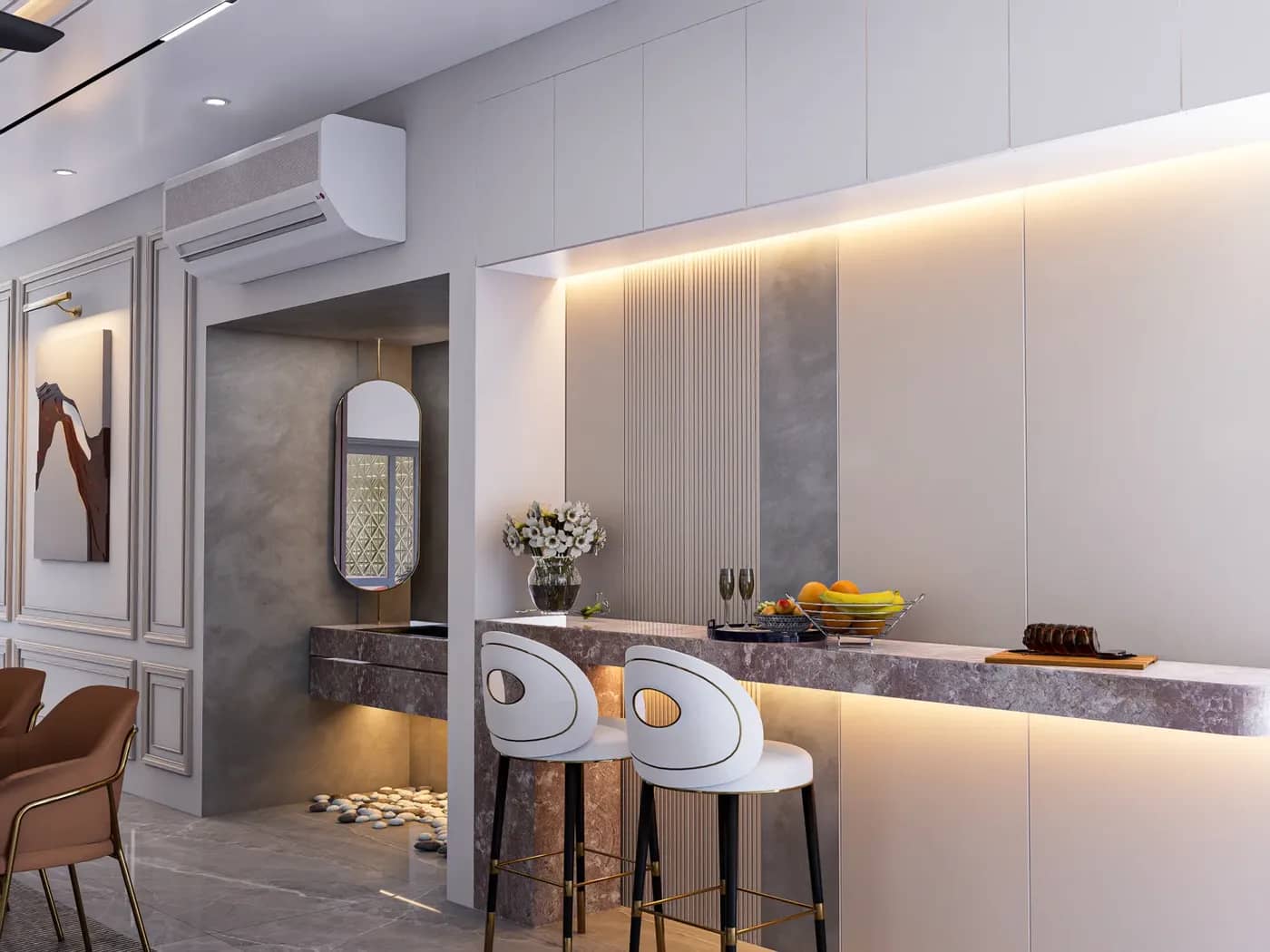
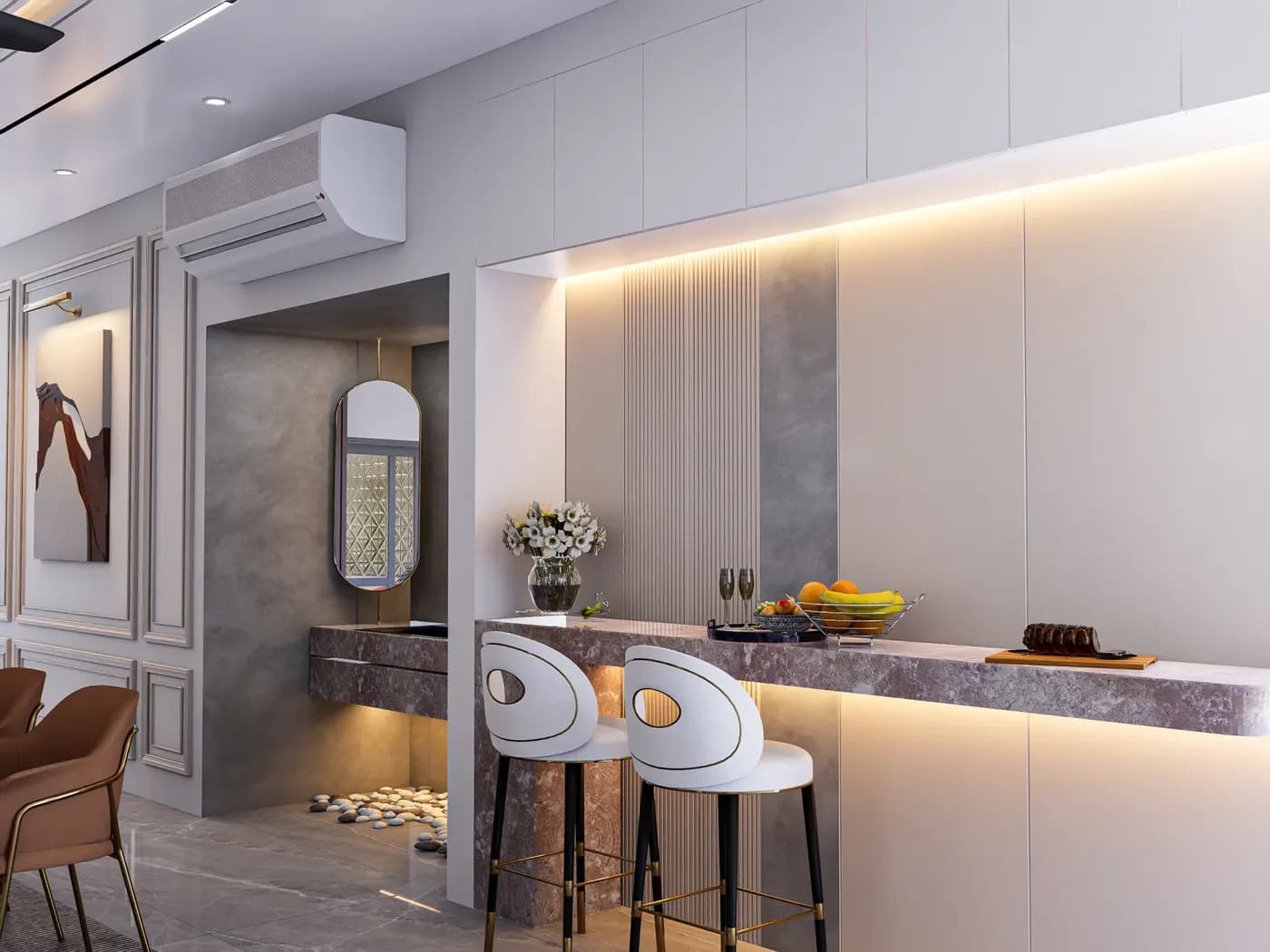
- Accent or mood light adds atmosphere, such as cove lighting, a lit TV wall or a lamp near a feature wall.
Not every room needs all three in equal measure. A bathroom needs good general and mirror light; a living room benefits from all three on separate switches.
Room-by-room lighting guide
Living and drawing room
This room hosts guests, family television time and quiet reading, so it needs several settings rather than one bright switch. Keep general light soft, add a reading light beside the main sofa, and use cove or wall lighting for evenings. Check that no downlight reflects directly on the TV screen from the seating position.
Dining area
Place the pendant or main light over the planned table position, not the centre of the room. In open drawing-dining layouts, the dining light also helps define the dining zone without a partition. Keep the light low enough to light the table, but high enough not to block the view across it.
Kitchen
Ceiling lights alone throw your shadow onto the counter. Add under-cabinet lighting along the worktop, and use neutral white so that food colours look natural. Bangladeshi cooking produces heat, steam and oil, so choose fittings that can be wiped clean and keep them away from the hob.
Bedrooms
Plan switching from the bed: you should be able to turn off the main light without getting up. Bedside reading lights or wall lamps are more useful than extra ceiling lights. Warm white suits bedrooms best in the evening.
Children's room and study
A dedicated desk light is essential for homework and exam preparation. Position it on the opposite side to the writing hand so the hand does not cast a shadow on the page.
Bathrooms
Light the face evenly from the front at the mirror, not just from above, which creates shadows under the eyes. Use fittings rated for damp areas, as bathroom humidity in Bangladesh shortens the life of ordinary fixtures.
Warm light or white light?
Many Bangladeshi homes use bright cool-white light everywhere. It is cheap and bright, but it makes living spaces feel like an office in the evening. A balanced approach works better:
- Warm white (around 3000K): bedrooms, living and drawing room, dining area
- Neutral white (around 4000K): kitchen counters, study desk, bathrooms, dressing area
- Cool white: best limited to utility areas, stores and the car parking
Whatever you choose, keep the same colour temperature within one group of lights. Two downlights side by side in slightly different shades of white look like a mistake, so check the specifications of every fitting in a room together.
Plan for load shedding and voltage fluctuation
This is the part most lighting guides written for other countries leave out. In Bangladesh, the lighting plan should include:
- A backup lighting circuit: decide which lights connect to the IPS or generator. Usually one light per bedroom, the living area, the dining table and the passage is enough. Keep cove and decorative lights off this circuit.
- Good-quality LED drivers: voltage fluctuation is a common reason LED fittings fail early. Ask your electrician about drivers suited to local supply conditions and about surge protection on the lighting circuits.
- Dimmer compatibility: if you want dimmable lights, confirm that the fittings, drivers and dimmer switches are designed to work together. Mixing brands at random often causes flicker.
Your electrical contractor should review the final circuit design against the actual site and the product specifications before installation.
Switches: walk through an evening at home
Imagine coming home at night. Which light do you need first at the door? Can you light the passage without turning on the whole drawing room? Can you switch off the bedroom light from bed? Group switches by activity rather than by room, and put two-way switches where a room or passage has two entrances. A switch plan is cheap to change on paper and expensive to change after the walls are painted.
Think about maintenance before the ceiling closes
Cove lighting is popular in Dhaka false ceilings, but open coves collect dust and insects, and the LED strip will eventually need replacing. Plan cove depth so the strip can be reached and cleaned. Keep drivers somewhere accessible instead of sealing them inside the gypsum board, and ask where the access points will be before approving the ceiling design.
Lighting checklist before ceiling work starts
- Furniture layout fixed for every room
- Each light assigned a job: general, task or accent
- Colour temperature chosen for each room
- Backup circuit lights selected
- Switch positions and two-way switches marked
- Driver and cove access agreed
- Lighting plan matched to the ceiling and electrical drawings
Frequently asked questions
Should apartment lights be warm or white?
Use both, by room and by task. Warm white (around 3000K) suits bedrooms and living areas in the evening, while neutral white (around 4000K) works well in kitchens, study corners and bathrooms. Very cool white is best kept to utility areas. Choose one colour temperature for each group of lights so adjacent fittings match.
When should lighting be planned in an apartment interior?
Before the false ceiling and wiring are finalised. Once the gypsum board is closed, moving a light point or adding a circuit means cutting and repairing the ceiling. Fix the furniture layout first, then the lighting plan, then the ceiling design.
How do I keep lights working during load shedding?
Ask your electrician to put a selected set of lights on a separate circuit connected to the IPS or generator, usually one light in each bedroom, the living area, the dining table and the passage. Cove and decorative lights are normally left off the backup circuit so they do not drain it.
Do cove lights in a false ceiling need maintenance?
Yes. Open cove channels collect dust and insects, and LED strips and drivers eventually need replacing. Plan cove depth so the strip can be reached and cleaned, and keep drivers in an accessible position rather than sealed inside the ceiling.
Plan your apartment lighting with us
Lighting works best when it is designed with the furniture, ceiling and finishes as one plan. Our apartment interior design service and home interior design service cover the full layout, including lighting and false ceiling coordination. For a finished example, see Mr. Ronne's luxury apartment in Gulshan 2, and read our guide to interior materials that suit Bangladesh's climate.
Get an early budget with our interior cost estimator, then book an appointment. Bring your floor plan and a list of the furniture you plan to keep, and we will plan the lighting before any ceiling work begins.